I know it’s been a long time since I’ve posted on my blog beinggaby.co.uk and on my social media .I have had a pretty rough year this year. Things have been very stressful and life has changed a lot, but now feels like the time to tell you what’s actually been going on and unmask. After melting down as an adult and countless visits to A&E and being on so much medication, things really needed to change.
The realisation
The realisation started in March of 2023 after 2yrs of being diagnosed with OCD I began exposure response prevention therapy, which helped a lot, but something still wasn’t right. I had a meeting with the mental health team where they mentioned about yet more medication for the meltdown. I left ERP as my therapist was very concerned and decided they would refer me to somewhere else to receive more treatment that was focused more on my physical disability, cerebral palsy.
In August, I began therapy with Disability Plus, where I spoke about the fact that the CMHT(community mental health team) had mentioned the reason for the meltdown could be sensory. What happened next changed everything.
Not really aware that the term ‘meltdown was an actual term for something that I had no idea could relate to me. I have been experiencing what I call meltdowns for 4years beginning in 2019- 2020 during the pandemic and my paid employment see mental health and me blog series. Not really understanding what triggered them or whether I could tell when they were going to happen. I already have severe anxiety and OCD so things can be a struggle but little did I know something else was lingering in the background.
Therapy
In therapy I spoke about my mental health and things I struggle with and what my life is like which prompted my therapist to talk about neurodivergence, something of which I had no idea of what it even was although I do know some people who experience this situation.
After our session, my therapist recommended that I watch and read about neurodivergence, specifically autism and ADHD something that personally I had no clue of. I realised from our conversation and recommended research materials that I identified as being on the spectrum, specifically Autism, something which was previously mentioned in a conversation I had with my mum not too long before.
My mum had mentioned that she suspected I was autistic, me who scoffed at this assumption and debunked it straight away, and tried to move immediately away from the conversation and was unable to mention another word on the subject until the first therapy session that I had.
I have learnt a lot about myself and why I behave and have behaved a certain way, learning about stimming, the coke bottle effect and self regulation and the Spoon theory.
What’s the Spoon theory?
The Spoon theory is a metaphor used to depict how much effort (spoons) it takes for an individual to negotiate daily activities.
What is Stimming?
Stimming is a self stimulatory behaviour such as hand flapping, rocking back and forth and repetition of movement or vocalisations.
My experience with Stimming
I have masked for 25yrs not really know what that was and struggled to fit in and have been looking at the world in a way I didn’t understand because I didn’t know a neurotypical world because I myself was not part of that demographic little did I know. Recently though, I have been unmasking and seen an increase in my stimming behaviour specifically loud vocalisations, rocking back and forth and clapping hands
What is the coke bottle effect?
The coke bottle effect is a term that describes a neurodivergent brain masking in certain situations and trying to cope (the stress fizzes up like a shaken coke bottle. The explosion of the coke as the bottle of coke opens signifies a neurodivergent reaction or response to a situation, meaning metaphorically, the coke overflows out the bottle.
Learning acceptance of myself.
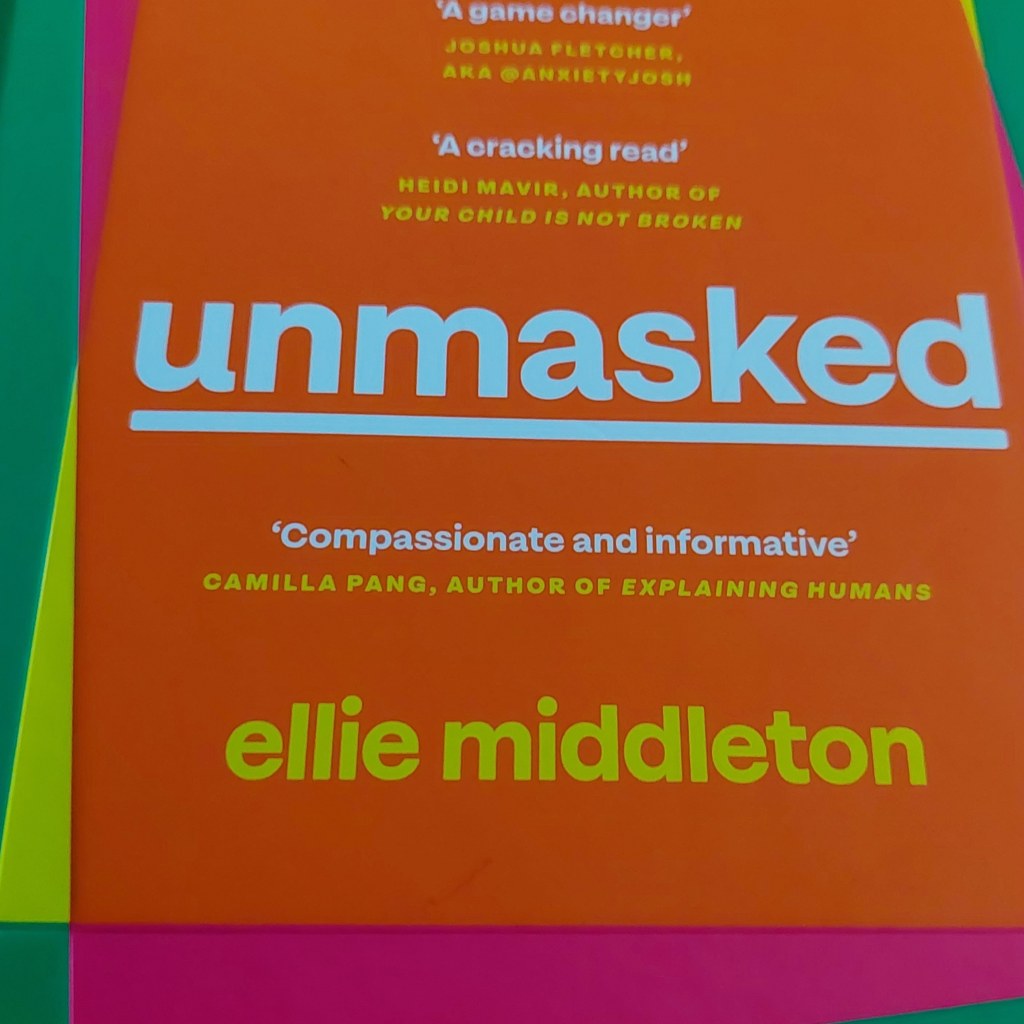
I have also been reading and researching autism in a way to discover my true self . I started by reading, I think I might be autistic by Cynthia Kim, a guide to autism spectrum disorder and self discovery for adults, which I felt was simple yet informative. The second i read was Daniel m Jones of Aspie World book, Autism for adults. The next one I read literally saved me and aided me so much with discovery of myself, the book is called Unmasked ultimate the guide to ADHD,Autism and neurodivergence by Ellie Middleton. This book in particular really resonated with me as it helped me see similarities between myself and Ellie Middleton. Furthermore, learning about the facts and experiences had by late diagnosed neurodivergent individuals and specifically late diagnosed autistic females.
In November, my research took me to another book, Autism feels… by Orion Kelly, an Australian content creator, telling his story of being a late diagnosed, married autistic adult with a autistic son and neurotypical son.

Things that help me manage my condition
My coping mechanisms Include my music and headphones ( Spotify, cassette player and tapes, writing, planning my day. Spending time with friends, watching anime, doctor who, playing video games, and going to my volunteering and other things that I’ll explain more about in the future.
I have also found great comfort by watching and reading about fellow neurodivergent people on social media.
The next step
A.s I await a medical diagnosis, I am on a journey of self discovery of the Unmasked, happier, Gaby I will begin to find out how I can be myself and make a positive contribution to the world that I hope in turn will empower and allow neurodivergent individuals like me to live as their authentic neurodivergent selves in a world not built for them.

 BeingGaby